Full Site Menu

Every page and section, in one place.

B. Independent Marine Assurance Services

An independent layer of technical control

Greenport functions as an additional, independent layer between the project owner, operator, terminal, vessels, contractors and marine operations — identifying deviations early, verifying operational integrity, controlling risk and tracking findings systematically through to closure.

01 · Marine Operations Integrity Assessment Services

An independent technical layer across every marine operation

Greenport acts as an independent technical advisor and interventor of marine operations integrity — representing the client's interests and verifying that vessels, critical equipment, contractors and operations remain within safe, technically acceptable conditions aligned with operational, contractual, HSE and regulatory requirements.

The concept is not to replace the shipowner, operator, manufacturer, classification society or maritime authority — Greenport is an independent layer of technical control, monitoring and verification.

How Greenport accompanies the full lifecycle

Vessel Selection→ On-Hire→ Acceptance→ Operational Monitoring→ Failure Management→ Marine Assurance→ Corrective Actions→ Return to Service→ Performance Monitoring→ Off-Hire

A. Offshore Marine Operations Integrity Assessment

Independent technical and operational follow-up of offshore support vessels contracted for oil & gas and marine support projects — from technical visits and condition assessment to Dynamic Positioning integrity and contractual compliance.

PSVOSRVAHTSTugsBargesOther Offshore Support Vessels
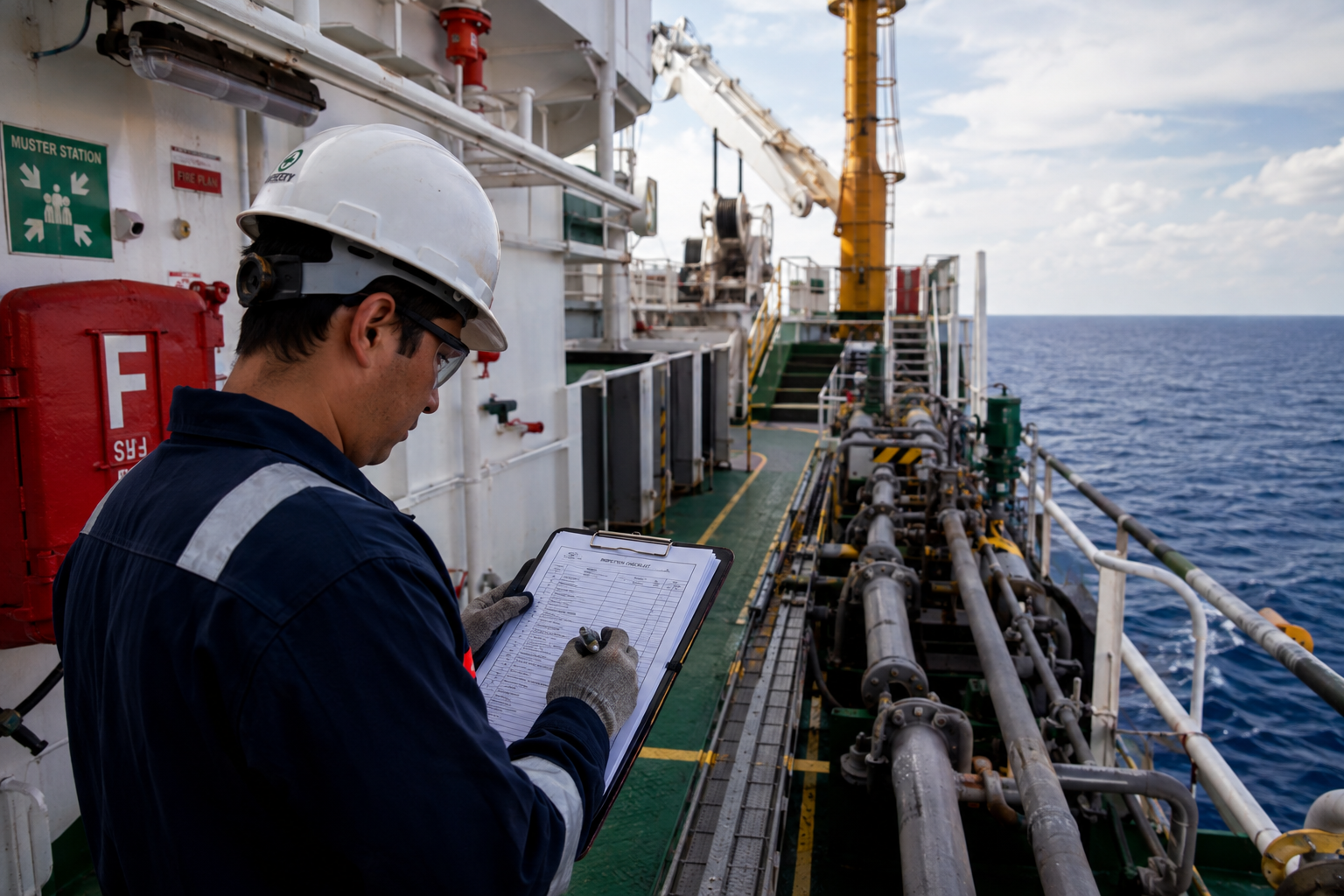
  • Technical visits, onboard inspections and vessel condition assessment
  • Review of technical, operational, maritime and HSE documentation, and contractual compliance verification
  • Follow-up of mechanical, electrical and operational failures — propulsion, thrusters, steering gear and generation
  • Dynamic Positioning (DP) integrity: FMEA/FMECA, ASOG, CAMO/CAM/TAM review and redundancy verification
  • Technical anomaly analysis, risk classification and Bow-Tie / barrier integrity follow-up
  • Corrective action management: repair follow-up, functional tests, sea trials and DP trials
  • Incident and near-miss follow-up, Root Cause Analysis support and Lessons Learned
  • Technical reporting, client coordination and contractor / marine logistics performance follow-up

Methodology

Vessel / Operation Monitoring→ Identification of Deviation→ Technical Assessment→ Risk Evaluation→ Corrective Action→ Repair / Mitigation Follow-up→ Testing→ Verification→ Return to Service→ Technical Closure→ Lessons Learned

B. Technical On-Hire / Off-Hire Vessel Inspections

Not a paperwork review — a full technical inspection of the vessel before it enters the project, and again when its service ends.

On-Hire Technical Inspection
Hull & Structural ConditionEngine Room & Main / Auxiliary EnginesPropulsion, Thrusters & Steering GearElectrical & Generation SystemsNavigation & Communication (Radar, ECDIS, GPS, AIS, GMDSS)Fire Detection & FirefightingLife-Saving Appliances & Emergency SystemsDeck Machinery, Cranes & Lifting EquipmentMooring & Towing EquipmentCargo & Product SystemsDynamic Positioning SystemsFMEA/FMECA, ASOG & CAMO Documentation

Functional and operational testing

Functional & Alarm TestsEmergency & Communication TestsPropulsion, Steering & Thruster TestsGenerator Load TestsDP Trials / DP Functional TestingBlackout Recovery Tests

Sea trial verification

Propulsion & Steering PerformanceThruster Performance & ManeuverabilityNavigation & CommunicationsDP Performance & Position KeepingEmergency Response & Alarms
Outcome: confirmed Vessel Operational Readiness before the vessel is accepted onto the project.
Off-Hire Technical Inspection
  • Condition comparison against the on-hire baseline
  • Identification of damage, deterioration and open deficiencies
  • Condition of machinery, critical equipment and DP systems
  • Condition of deck, navigation, communication and safety equipment
  • Fuel and consumable quantities where contractually relevant
  • Photographic and documentary evidence
  • Outstanding corrective actions and technical pending items
Outcome: a consolidated Final Off-Hire Condition Report.
Offshore support vessel passing a coastal cliff
Tugboat returning to port at sunset

Methodology

Pre-On-Hire Technical Assessment→ On-Hire Inspection→ Functional Testing→ Sea Trial→ Vessel Acceptance→ Operational Monitoring→ Failure / Deviation Follow-up→ Corrective Actions→ Performance Monitoring→ Off-Hire Inspection→ Final Condition Report

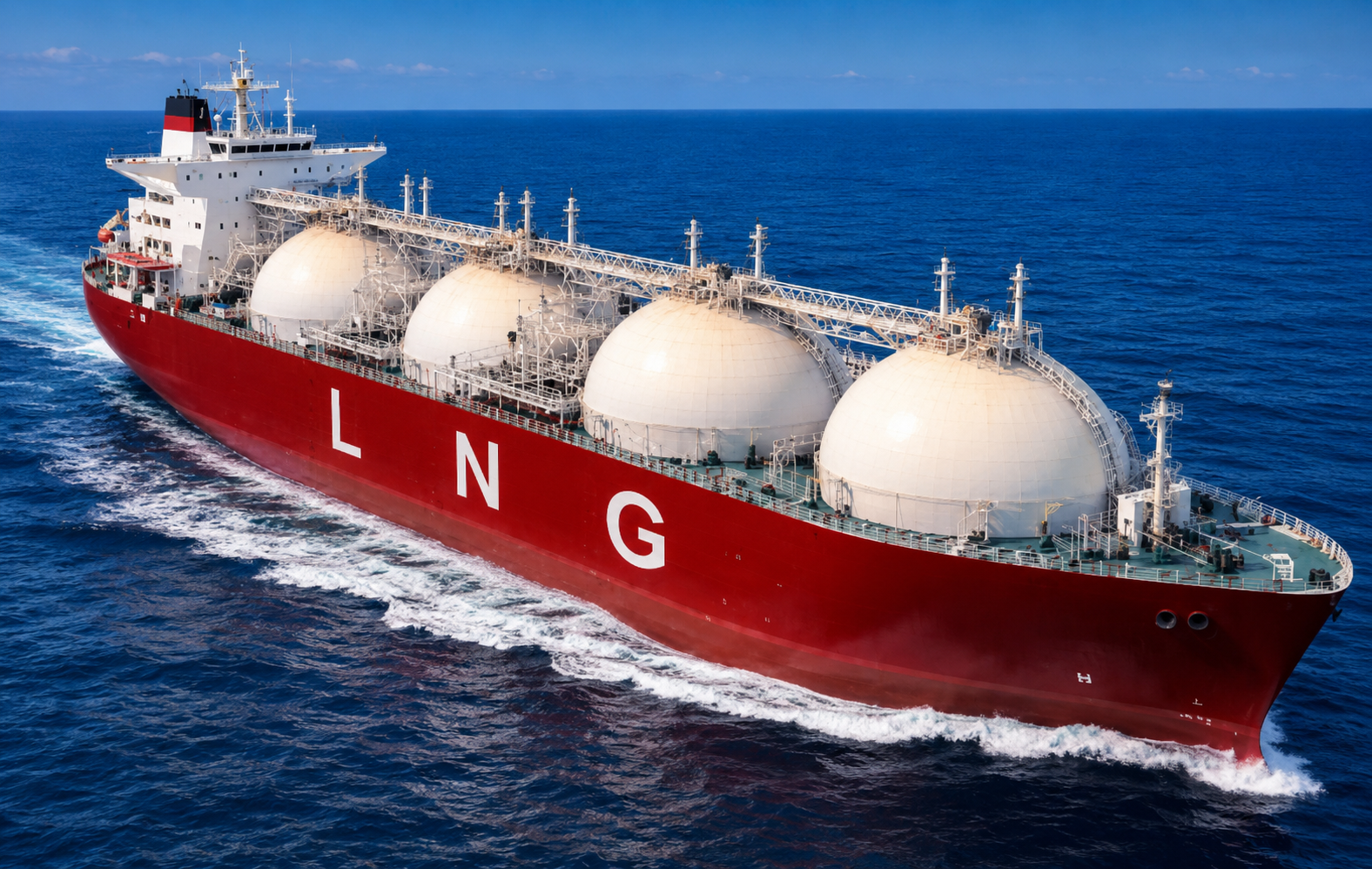
D. LNG Marine Operations Integrity Assessment

The same methodology applied to LNG carrier, FSRU and STS transfer operations, with a specialized cryogenic and transfer-system scope.

  • LNGC / FSRU operational interface monitoring
  • Supervision of transfer operations
  • Follow-up of critical systems & equipment
  • Failure or anomaly identification
  • Operational deviation tracking
  • Corrective action management
  • Repair & maintenance follow-up
  • Post-repair testing verification
  • Return to Service condition verification
  • Technical closure of findings
  • Lessons Learned & recurrence prevention

Systems and equipment covered

Emergency Shutdown Systems (ESD)Emergency Release Systems (ERS/ERC)Cryogenic hosesLNG loading armsTransfer pumpsValvesVapour return systemsMooring systemsWinchesFendersFirefighting systemsShip-to-ship communicationsInstrumentationSafety-critical equipment

When a failure occurs

Detection→ Registration→ Risk Assessment→ Corrective Action→ Repair Follow-up→ Testing→ Verification→ Return to Service→ Technical Closure→ Lessons Learned

E. Marine Terminals and Port Operations

The same independent oversight applied to the terminal itself — berthing, mooring, fendering and the marine interface between vessel and shore.

Berthing / Unberthing OperationsMooring SystemsFender SystemsLoading / Unloading InterfacesTerminal Marine ProceduresContractor PerformanceEmergency PreparednessAudits & Compliance Monitoring
Whether the asset is a PSV supporting an offshore campaign, an LNG carrier at a jetty or a terminal berth, the same independent layer applies: Greenport verifies safety, integrity, reliability and compliance — without ever replacing the responsibilities of the owner, operator, classification society or maritime authority.
02 · Marine HSEQ Assurance

Independent HSE/HSEQ support for marine and LNG transfer operations

Independent oversight and specialized HSE/HSEQ support across the operation, from permits and toolbox talks to incident investigation and corrective action.

Greenport can also supply Marine HSE/HSEQ Advisors specialized in LNG and marine operations.
  • HSE Operational Supervision
  • Permit to Work (PTW)
  • Toolbox Talks
  • JSA / JHA
  • SIMOPS Monitoring
  • LNG & Cryogenic Hazards
  • Gas Detection & Exclusion Zones
  • PPE Compliance
  • Stop Work Authority
  • Near Miss Management
  • Unsafe Acts & Conditions
  • Environmental Observations
  • Contractor HSE Monitoring
  • Incident Investigation & RCA Support
  • Corrective Action Management
  • Emergency Preparedness
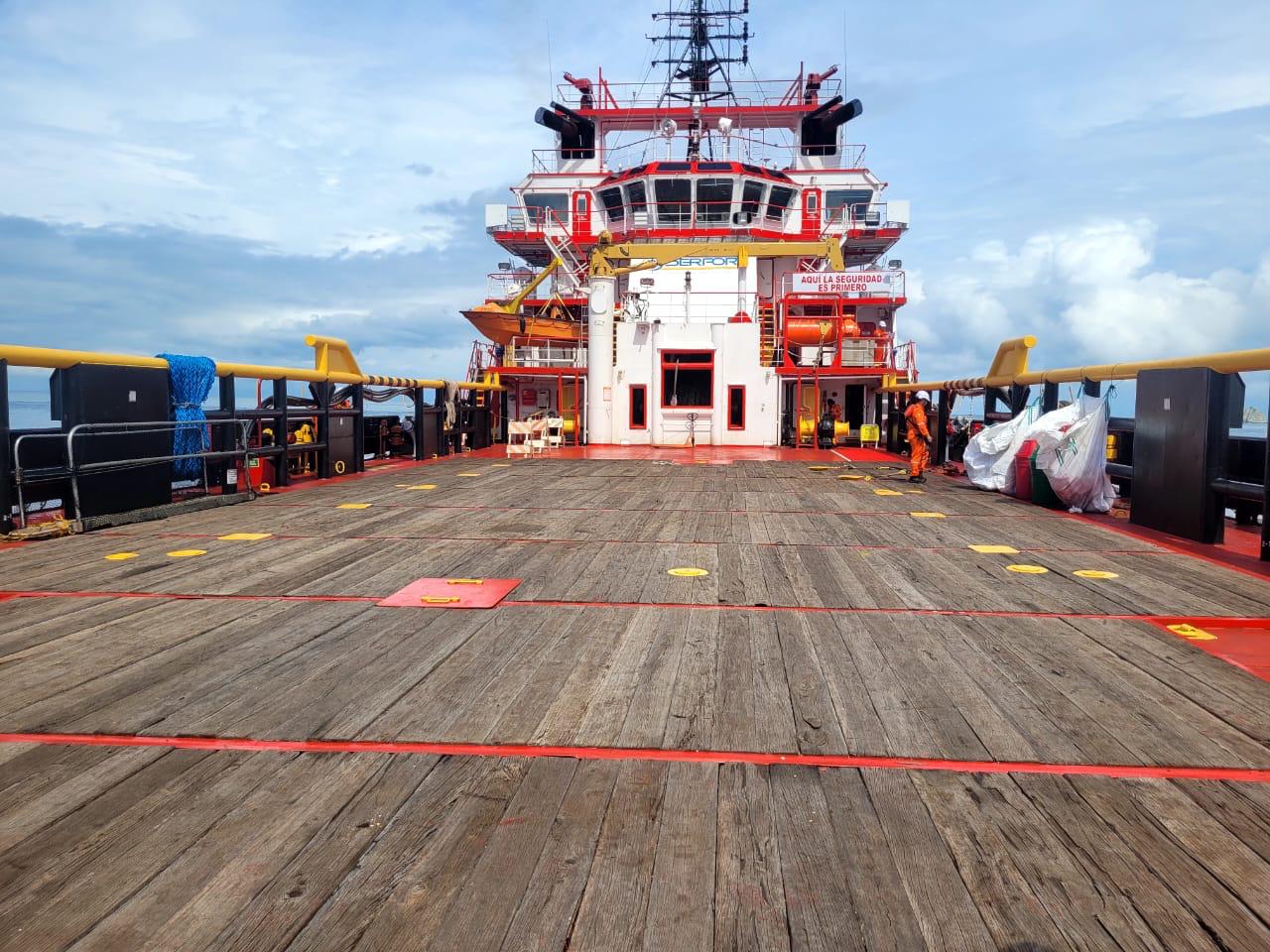
Deck crew working under a safety-first sign aboard an offshore support vessel
03 · Maritime Safety Management Services

Distinct from HSEQ — focused on the Safety Management System

This line is clearly differentiated from HSEQ because it relates directly to Maritime Safety and the Maritime Safety Management System.

Specialized profiles available: Maritime Safety Advisor / Maritime Safety Responsible Personnel.
  • Maritime Safety Management System implementation
  • Maritime Safety Compliance Monitoring
  • Follow-up of maritime safety policies & procedures
  • Deficiency identification
  • Operational Safety Verification
  • Corrective Action Management
  • Emergency Preparedness, Drills & Exercise Coordination
  • Contractor follow-up
  • Safety KPI Monitoring & Management Reporting
  • Continuous Improvement & Compliance Monitoring
04 · LNG and Marine Operational Risk

Risk analysis integrated with real operations

Dedicated to the analysis and management of risk associated with LNG, FSRU, STS, offshore and marine terminal operations — not limited to documentary studies.

  • HAZID
  • HAZOP Support
  • Bow-Tie Analysis
  • QRA Support
  • LNG Transfer & STS Risk Assessment
  • SIMOPS Risk Assessment
  • Mooring Risk Assessment
  • Navigation & Marine Risk
  • Gas & Explosion Risk
  • Barrier Management
  • Emergency Scenario Analysis
  • Management of Change (MOC)
  • ALARP Support
  • Verification of Risk Controls
  • Operational Risk Reviews
Offshore support vessel underway in open water
05 · Regulatory and Operational Readiness

Technical and documentary preparation ahead of operations

Greenport supports clients in technical and documentary readiness before the start of operations and ahead of inspections or regulatory verifications — for Colombia, including support related to DIMAR Resolution 0250 of 2026.

  • Mandatory regulatory framework for LNG, FSRU, STS, offshore and marine terminal operations in Colombia
  • Sets safety, technical and operational requirements operators must demonstrate compliance with
  • Verified through DIMAR inspections and regulatory audits
  • Requires documented technical and procedural readiness before operations begin

At a glance

Issuing AuthorityDIMAR — Colombian Maritime Authority
ScopeLNG, FSRU, STS, Offshore and Marine Terminal Operations
RegulationResolution 0250 of 2026
Greenport's RoleIndependent gap assessment, compliance review and readiness verification

What this covers

Regulatory Gap Assessment Resolution 0250 Compliance Review Operational Readiness Review Pre-operation Audits Procedure & Checklist Verification Documentation & Transfer Readiness Emergency Readiness Pre-DIMAR Readiness Reviews Equipment Documentation Verification Corrective Action Tracking Final Readiness Verification

Example progressive readiness program

Each milestone counts down the days remaining before the operation starts — "T" marks day zero, when the operation itself begins.

Click each milestone to see the detail.

T-30 days Gap Assessment

Initial regulatory & technical gap review

T-15 days Verification Review

Follow-up on corrective actions

T-7 days Operational Readiness Review

Full procedure & equipment verification

T-1 day Final Readiness Check

Last verification before operation

T Operation Independent Assurance

Real-time independent oversight

T+ Post-op Lessons Learned

Corrective action closure

06 · Safety and Operational Performance Management

Beyond safety cards: safety and operational performance, integrated

This line integrates both safety and operational performance into a single system — digitized through the Greenport Marine Assurance Dashboard (GMAD).

Safety Observation and Behavioral Program

Records observation types including:

Safe BehaviorsUnsafe BehaviorsUnsafe ActsUnsafe ConditionsNear MissesPositive ObservationsEnvironmental ObservationsStop Work InterventionsHSE FindingsContractor ObservationsBarrier Failures

Each observation captures: Category · Risk Level · Responsible Person · Target Date · Corrective Action · Evidence · Status · Closure Date.

Operational Performance and Assurance Management

Controls findings directly related to the operation:

Operational DeviationsCritical Equipment FailuresMarine Integrity FindingsLNG Transfer DeviationsESD/ERS IssuesHose / Loading Arm FindingsValve FailuresMooring DeficienciesFender DeficienciesMaintenance FindingsAudit FindingsRegulatory FindingsCorrective ActionsTesting VerificationReturn-to-Service VerificationLessons Learned